


How it works in 4 simple steps
-

Add water and FlowGrow nutrients to the reservoir.
-

The pump moves nutrient water to the Flow Cap at the top.
-

The Flow Cap spreads nutrient water gently through the tower.
-

Roots take up what they need, and nutrient water returns to the reservoir.


Inside FlowGrow
See what’s happening inside the tower.
Nutrient water travels to the top of the tower, gently trickles past the roots, then returns to the reservoir ready to circulate again.

What you do
The timer handles the watering cycle. You handle the growing moments.
The pump runs on a timer, moving nutrient water through the tower at regular intervals. This keeps the roots hydrated and fed without you needing to water each plant by hand.
Your part is simple. Check the water level, top up the reservoir when needed, add nutrients, and keep an eye on how your plants are responding.
In the first few weeks, it's worth checking the pH now and then while you get used to your tower. If you use an EC meter, it can help you understand the strength of your nutrient water, but it's completely optional.
For most home growers, refreshing the reservoir every 2–3 weeks and topping up with fresh water between changes is all that's needed to keep nutrients balanced and plants growing well. You don't need to chase perfect numbers every day.
Most days, it's simply a quick glance as you walk past. When fresh growth is ready, you pick what you need.
Want to understand nutrients better? Read our guide: Understanding hydroponic nutrients.

Light Matters
Good light makes a real difference.
A bright indoor space near a window, or a covered outdoor area with consistent sunlight, will give the best results. In warmer months plants grow faster; in cooler or lower-light seasons, growth slows down.
Fruiting plants like cherry tomatoes, peppers, chillies, and strawberries need stronger light to perform well. Herbs and leafy greens are usually more forgiving, which makes them a great place to start if your space is not especially sunny.
If light is coming from one direction, plants will lean toward it. Turning the tower daily keeps growth even. If natural light is limited, grow lights can help, especially through winter.

Starting with seeds or seedlings
You can start your tower with seeds or small seedlings. Both work. Seedlings are simply the faster way to get growing.
Seeds start outside the tower in a germination tray. A planting sponge or rockwool cube holds the seed while it sprouts and develops early roots. Once the seedling has a few leaves and a small root system, it can move into the tower.
You can also start with small seedlings from a garden centre. If they have been grown in soil, gently rinse the roots before placing them into a sponge or net cup. The roots need to be soil-free so they can settle properly inside the tower.
Planting sponges are included with every tower. For a more complete start, the Starter Kit includes nutrients, a measuring cup, rockwool cubes, a germination tray, and net pots.
What grows well in a FlowGrow tower

Herbs
Basil, parsley, coriander, mint, thyme, oregano, and chives.

Leafy Greens
Lettuce, rocket, spinach, kale, and smaller Asian greens.

Fruiting favourites
Strawberries, compact chillies, peppers, and tomatoes.

Edible flowers
Violas and other edible flowers suited to container-style growing
One system, three sizes
-

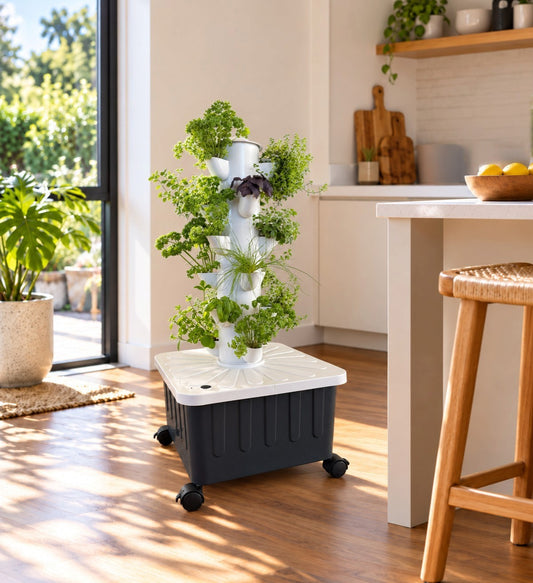 Free Shipping
FlowGrow Hydroponic Tower | 6 Layer | 18 Plant Sites
Regular price From $349.00 NZDRegular price -

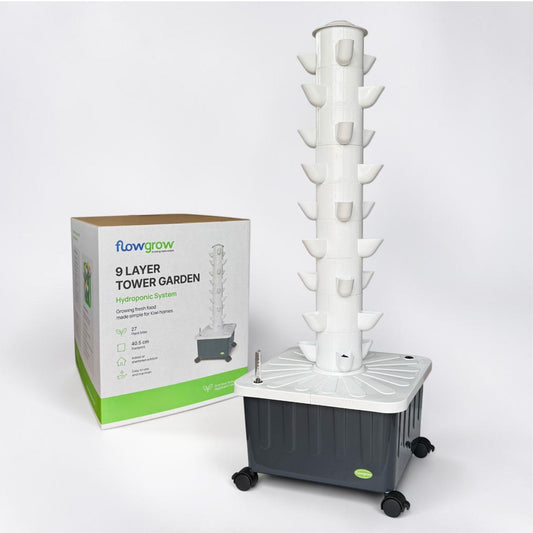 Free Shipping
FlowGrow Hydroponic Tower | 9 Layer | 27 Plant Sites
Regular price From $399.00 NZDRegular price -

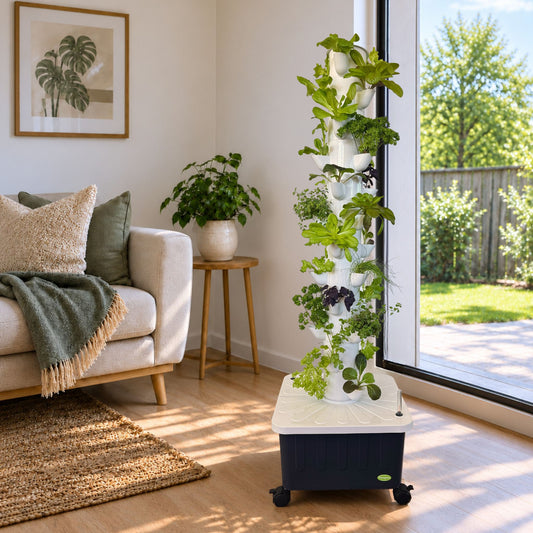 Free Shipping
FlowGrow Hydroponic Tower | 12 Layer | 36 Plant Sites
Regular price From $449.00 NZDRegular price


NOW AVAILABLE IN STORE
See FlowGrow for yourself.

Prefer to see a tower in person?
Visit Mitre 10 MEGA Nelson.